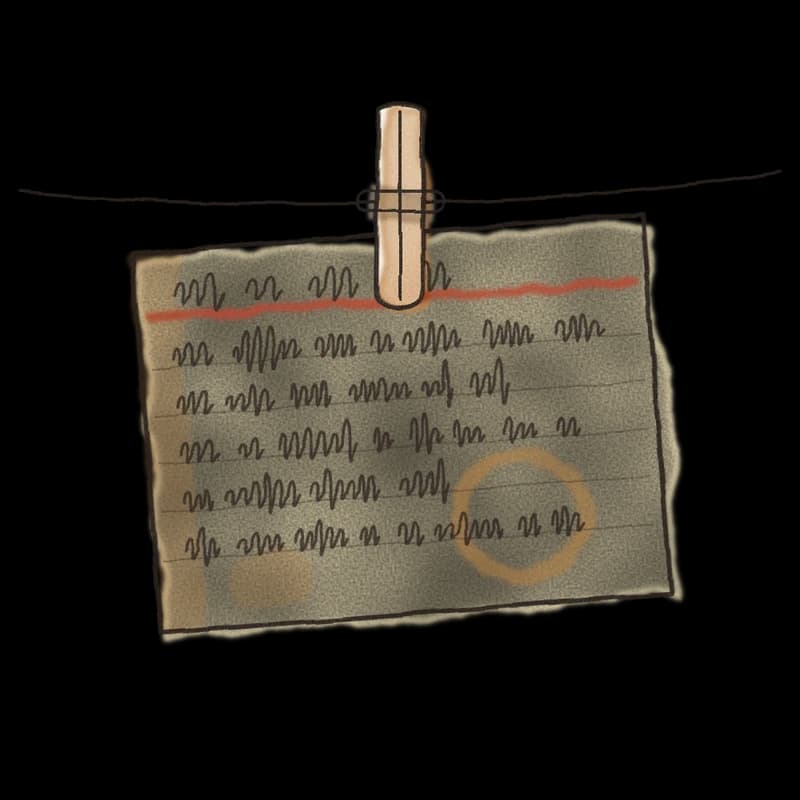
Every December my cousin photographs Mormor's cardamom braid card and texts it to the family. Every December the photo is a little worse. Taken at night, under the kitchen light, at an angle, with a thumb in the corner and a shadow over the word everybody argues about. The card is in a sleeve on my fridge, so we can always take another. Most families are not that lucky. For a lot of cards, the photo you take this year is the one your grandchildren will have.
We read a great many cards at Kitchenlore, and the single biggest difference between a recipe that comes back whole and one that comes back full of [hard to read] marks is not the model. It is the photo. Here is what actually helps, in the order it matters.
1. Daylight, from the side
Put the card near a window during the day. Indirect daylight is the most even, most honest light you have, and it shows pencil and faded ballpoint far better than a ceiling bulb. Turn the flash off. A flash bleaches the lightest strokes, which on an old card are usually the ones you need most: the amounts, the oven temperature, the note squeezed into the margin.
If the card has a glossy coffee ring or a plastic sleeve, tilt it slightly away from the window until the glare slides off the writing. Take the card out of the sleeve if you can do it without tearing it. Sleeves protect cards; they do not photograph well.
2. Flat, square and filling the frame
Lay the card on a plain surface a little darker than the card itself: a wooden cutting board, a dark tea towel, the kitchen table. The contrast helps both people and software find the edges. If the card curls, weigh the corners with a couple of spoons, keeping them off the writing.
Hold the phone directly above the card, parallel to it, not at an angle. An angled photo makes the far side of the card smaller and blurrier than the near side, and the far side is always where the last step is written. Move closer until the card fills most of the frame with a little border around it. Tap the screen on the writing to focus, wait a breath, and take the picture.
3. Both sides, every time
A surprising number of cards continue on the back. Sometimes it is the rest of the method. Sometimes it is the thing that makes the card worth saving: who it came from, the year, a line like "Doubled for Ellen's wedding, too sweet." Photograph the back even if you think it is blank. In Kitchenlore you can add both photos to one recipe and they are read together.
4. Take three, keep the best
Phones are good at guessing which photo is sharp. They are not perfect. Take three photos of each side and look at them zoomed in before you put the card away. You are checking one thing: can you read the smallest writing on the card in the photo as well as you can on the card itself? If not, take another. Once the card goes back in the box, nobody is going to dig it out again until next December.
5. Keep the original file
Messaging apps shrink photos to save data. A card photo sent through the family group chat may arrive at a third of its original size, and the faint words are the first thing to go. Upload the original from your camera roll, or ask whoever took it to send it by email or a shared album at full size. Kitchenlore keeps the photo you upload, unchanged, attached to the recipe forever, so it is worth uploading the best one.
What about scanners?
A flatbed scanner at 600 dpi is excellent for cards that are flat and sturdy, and terrible for cards that are not. The glass presses on the card and the lid pulls on brittle edges. If you have a whole box of firm cards and an afternoon, scan them. If you have one card in a sleeve on the fridge, use your phone and the window. Do not let the perfect setup stop you from taking a good-enough photo today.
Why this matters more than it seems
Ink fades. Pencil smudges. Cards get wet, get lent, get lost in moves. The photo is the backup, and for many families it will become the only copy. A good one keeps the recipe legible for as long as the file exists. A poor one turns a clear word into a guess, and we will not guess for you. We mark the word [hard to read] and leave it for the family.
That is a good outcome when the card really is unreadable. It is a sad one when the card was perfectly clear and only the photo was not. So this week, pick the one card in the box that matters most, take it to the window, and give it five careful minutes.
- Daylight from a window, flash off
- Card flat on a darker surface, phone held level above it
- Card fills the frame, focus tapped on the writing
- Front and back, three of each, checked zoomed in
- Upload the original file, not the one from the chat