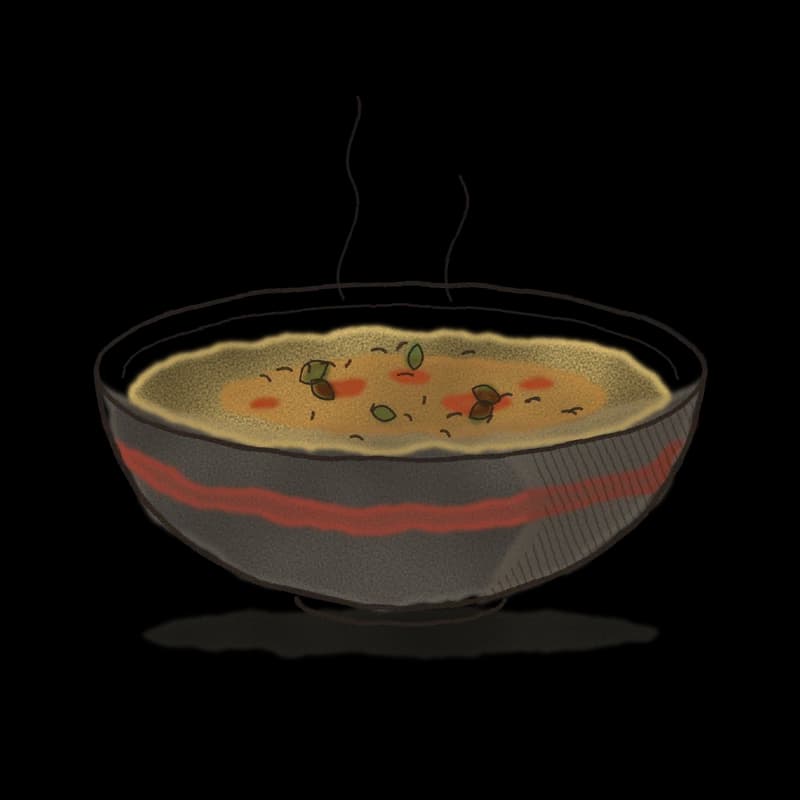
My dadi never wrote a recipe down in her life. When I moved away and asked for her dal, she called me and talked me through it while she cooked, and I recorded the call. Then I did it again for her kadhi, and her chhole, and the sweet she only made at Diwali. Over two years I ended up with forty voice memos on one old phone. When that phone started failing, I realized those memos were the only copy of most of what she knew how to cook.
I transcribed them in a hurry, and that weekend project became the first version of Kitchenlore. What I learned along the way is that the memo you record on purpose, with a little preparation, is worth ten you happen to have. Here is how to record one well.
Record while they cook, not while they remember
Ask someone to tell you a recipe across the table and you will get a summary. Stand next to them while they make it and you will get the recipe. The hands remember what the mind skips: the extra pinch of hing, the moment the onions are "done", the second rinse of the rice. Ask if you can join them the next time they make the dish, and bring your phone.
Put the phone close to them, face up on the counter, away from the stove fan and the running tap. Start recording before the cooking starts and leave it running. It is fine if the memo is forty minutes long. Long memos are where the good asides live.
Questions that get the recipe
- How much is that? Can you show me in my hand? (Then say out loud what you see: "about two tablespoons, heaped.")
- How do you know it is ready? What does it smell like, sound like, look like?
- What happens if I skip this step?
- What would you do if you did not have this ingredient?
- Is this how your mother made it, or did you change it?
- What do people always get wrong when they try this?
Saying the amounts out loud matters. Your grandmother may never say "one teaspoon". She will say "this much" and show you. If you describe what you see into the memo, the transcript carries it. In Kitchenlore, that sentence is kept exactly as you said it, and the amount goes into the recipe in your words, not converted into something tidier.
Questions that get the story
- Who taught you to make this? How old were you?
- When did the family make it? For what?
- Has it changed over the years? Why?
- Who in the family makes it best, other than you?
- Is there a version you do not like?
These are the answers you will want most in twenty years, and they are the first things lost. They also produce the lines that end up in the "In her words" notes on a recipe: the jokes, the warnings, the opinions about your uncle's version. Kitchenlore lifts those lines out of the transcript and sets them beside the method, and it checks each one against the memo word for word. If a line is not in the recording, it does not go in the book.
Small things that make a big difference
Say the date and the dish at the start of the memo. It sounds formal, but in ten years you will be glad to know which Diwali it was. Take a photo of the finished dish and of any spice tin or pot they insist on. Write down the name of the recording before you forget which of the forty it is.
Back the memo up the same day. Email it to yourself, put it in a shared family folder, or upload it to Kitchenlore, where the original recording stays attached to the recipe, unchanged, for the family to play. Phones get lost, and with them years of memos nobody knew were the last ones.
What we will and will not do with a voice
Many of the memos families send us are of someone who has died. We take that seriously. We transcribe what was said, and we keep the recording for the family exactly as it is. We will never clone a voice, synthesize speech in it, or make it say anything it did not say. A recording is a memory, not raw material.
If someone in your family still cooks a dish nobody has written down, this is the week to ask if you can stand next to them while they make it. Bring the phone. Ask how they know when it is done. Let them talk.